Why Ceramic Film Changed Car Tinting
Dyed film darkens a window. Ceramic film changes how the whole car feels in the sun.
For years, window tint was judged on one thing: how dark it looked. That made sense when almost every film on the market was dyed — a layer of colour that blocked light and not much else. It looked good for a season, then it faded, turned purple, and started bubbling at the edges.
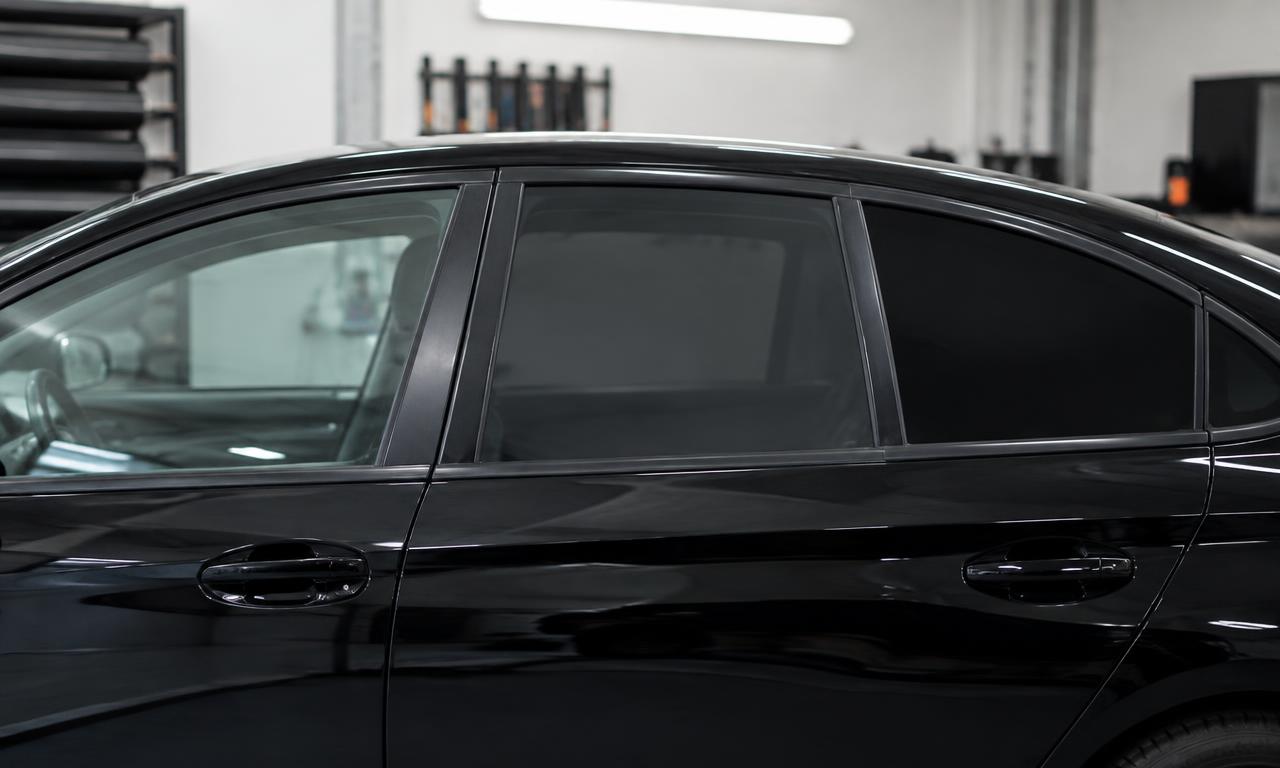
Ceramic film works differently. Instead of relying on colour to block light, it uses a ceramic particle layer that rejects infrared heat while staying optically clear. That means you can run a lighter shade and still get a cabin that feels dramatically cooler on a July afternoon on the Queensway.
The practical difference shows up in three places. First, heat: you notice it the moment you get in a car that has been parked in an open lot. Second, glare: low winter sun in Ottawa is brutal, and a good ceramic film takes the edge off without making the window feel murky. Third, longevity — ceramic does not fade to purple, because there is no dye to fade.
There is also the part nobody thinks about until it matters: signal. Older metallic films could interfere with GPS, phone signal, and tire pressure sensors. Ceramic is non-metallic, so everything in the car keeps working exactly as it did.
If you are choosing between a cheap dyed film and ceramic, the honest answer is that the cheap film costs more over five years. You pay once for the install, again for the removal, and a third time to redo it properly.
Thinking about tinting?
We tint cars, homes, and businesses across Ottawa. Tell us what you need and we will give you a straight answer and a real number.